How One Paper Changed the Way Computers See
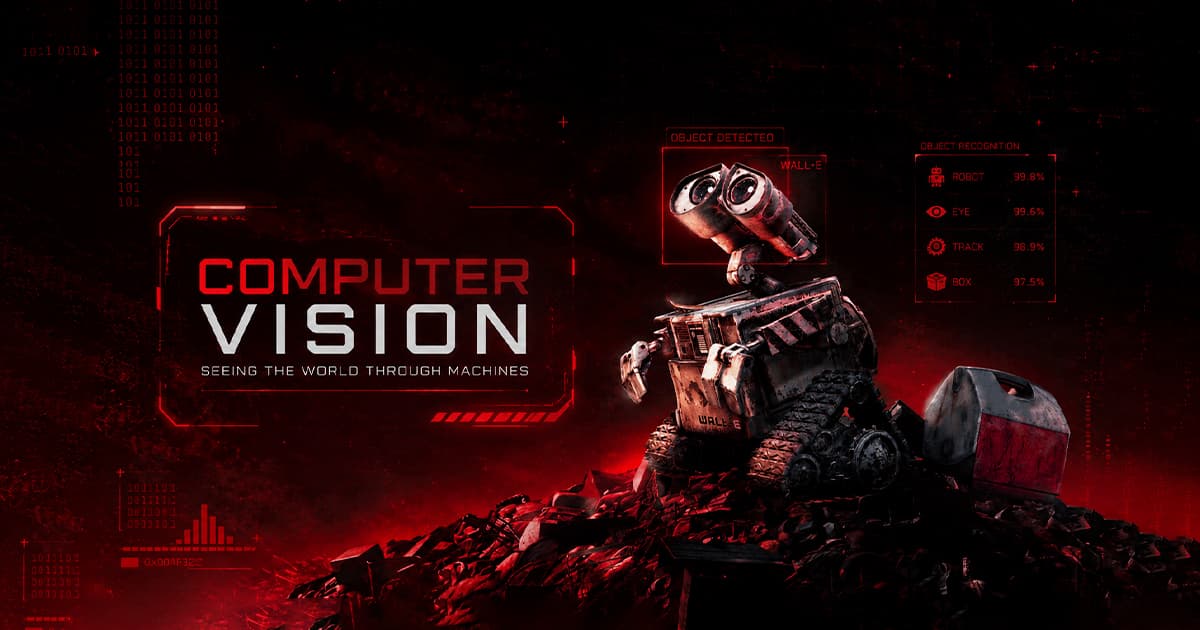

When I first started learning computer vision, neural networks seemed pretty straightforward. You give a model an image, it looks for patterns, and after enough examples it learns to recognize cats, cars, faces, or people.
For years, Convolutional Neural Networks (CNNs) were the main way of doing this. And honestly, they were really good at it.
But one thing always bothered me. An image isn't just a collection of small pieces. What happens in one part of an image can be connected to something happening much farther away. A person's face, hands, and feet all belong to the same person, even when they sit far apart in the frame.
So I started wondering: what if a neural network could learn which parts of an image should pay attention to each other?
That's where things get interesting.
The paper that changed everything
In 2017, Ashish Vaswani and seven other researchers published "Attention Is All You Need."
The paper wasn't about computer vision at all. It was about language.
The researchers introduced a new deep learning architecture called the Transformer, built around a mechanism called attention, a way for a model to weigh how much each part of a sentence relates to every other part. No recurrence, no convolutions. Just attention.
At the time, nobody knew how far the idea would travel.
From language to images: the rise of Vision Transformers
A few years later, researchers started asking the obvious follow-up question:
If attention helps a computer understand relationships between words, can it help a computer understand relationships between parts of an image?
The answer was yes.
Instead of processing an image as one big grid, you can break it into small patches, almost like breaking a sentence into words. The model then learns which patches matter to each other, no matter how far apart they sit.
That idea became the Vision Transformer (ViT), and it marked a genuine shift in modern computer vision. Suddenly Transformers weren't a language architecture that happened to work well. They were a general tool for understanding structure, whatever the input.
Why I find this interesting
The lesson here isn't really CNNs versus Transformers.
It's about how one idea from one field can completely reshape another.
The authors of "Attention Is All You Need" were working on machine translation. They almost certainly weren't thinking, this is going to change computer vision too.
But it did. Today, when we talk about AI systems that handle images, text, video, or all three at once, the ideas from that 2017 paper are somewhere in the foundation.
That's what makes it such an important paper. It didn't just introduce a new model. It introduced a new way of thinking about how a neural network understands relationships.
And sometimes that's all it takes to move an entire field forward.
Explore Other Blogs
View All Blogs
I Used to Spend Hours Looking for the Right Image. Then I Started Using AI
A designer’s journey of using AI to transform image sourcing saving time, improving creative flexibility, and creating more relevant visuals for Supermom’s Bangladeshi audience.
Read more
How AI Coding Tools Doubled My Output as a Software Engineer
AI hasn’t replaced the developer, it has become a fast debugging, coding, and learning partner that dramatically reduces development time while architecture, judgment, security, and accountability remain human responsibilities.
Read more